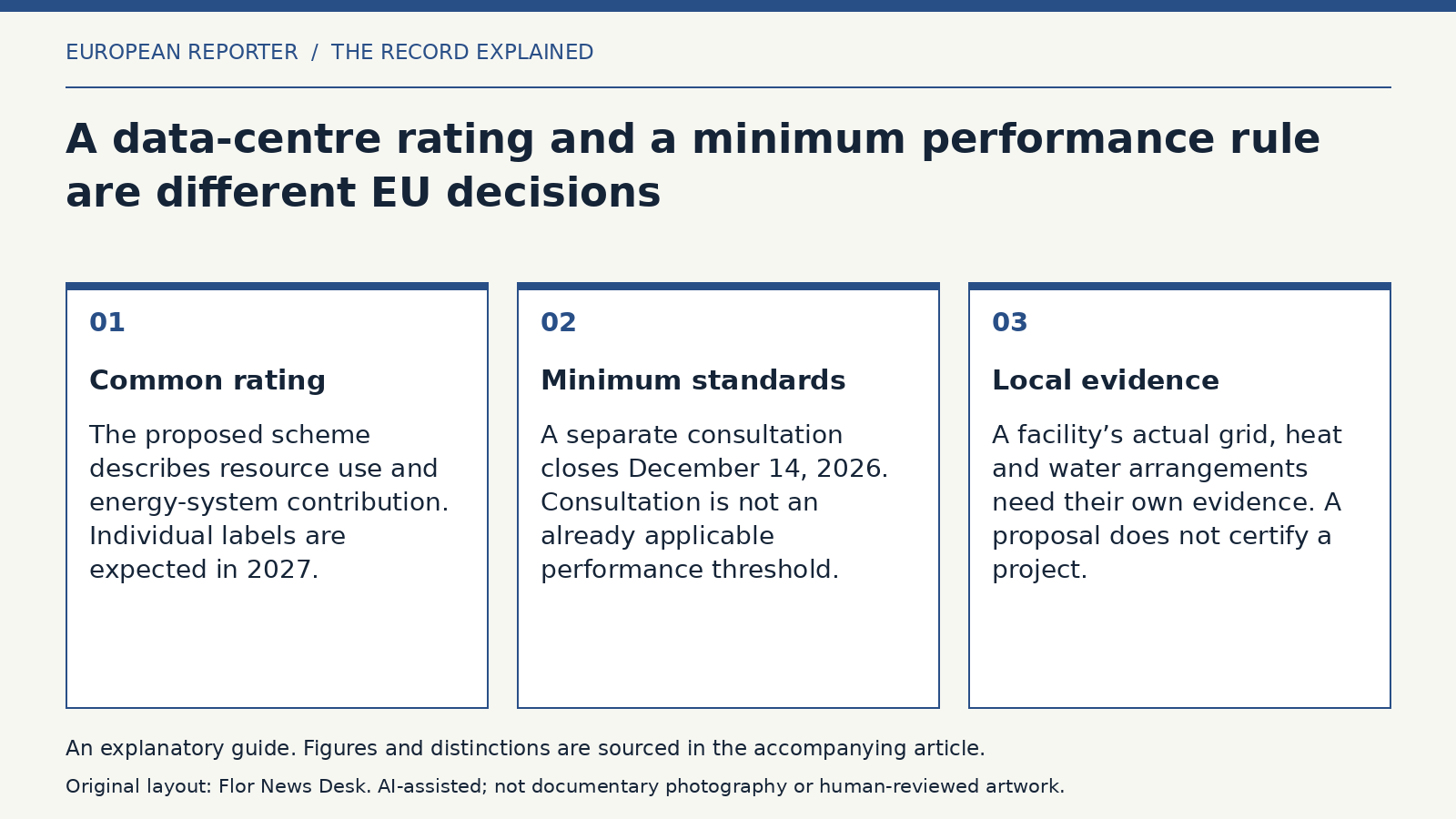
A label that describes a data centre’s resource use is not the same instrument as a rule establishing the minimum performance it must achieve. The European Commission’s September 21 package puts both ideas into public view, but at different stages. Its announcement of a common rating scheme says the proposal covers individual facilities with capacity above 500 kW and is subject to two months of parliamentary and Council scrutiny before entering into force.
The Commission expects the first individual sustainability labels in 2027. That is a stated implementation expectation, not evidence that a particular facility already displays an approved label. A report about the proposal should not be mistaken for a directory of certified operators.
Information and thresholds answer different questions
The proposed rating would make energy and water use more transparent and address contributions to the energy system, including waste-heat reuse. These dimensions help explain why a single claim about energy efficiency might leave important questions unanswered. A comparison needs to identify what is measured and the activity against which it is assessed.
The separate consultation on minimum performance standards runs until December 14, 2026. The Commission says the work is intended to inform a legislative proposal in the second quarter of 2027. Seeking evidence on possible standards is not the same as announcing that those standards already apply.
Imagine a hypothetical operator that reports several resource indicators accurately. That would establish information about the facility. It would not, without an applicable threshold and assessment method, establish compliance with a proposed future minimum. Conversely, a minimum requirement would not necessarily communicate every difference between facilities that satisfy it.
This is why the two approaches can complement each other without becoming interchangeable. Information permits comparison; a threshold supplies a boundary for a particular obligation. Their value depends on clear definitions and on avoiding claims that exceed what either instrument actually establishes.
A facility still belongs to a local system
The proposed attention to grid contribution also raises a question beyond the facility boundary. Identifying waste heat is different from demonstrating that a usable connection delivers it to a customer. A hypothetical project description should distinguish a potential resource, an agreed connection and actual use, rather than counting all three as the same result.
For a local authority considering an application, the package cannot supply facts about the available grid connection or the water conditions at a particular site. Those would require local evidence. Equally, the absence of that evidence in an EU announcement does not prove that a project lacks a viable arrangement. It identifies the next question, not its answer.
The immediate public task is to track two processes accurately: scrutiny of the rating proposal and consultation on possible minimum standards. Conflating them would make the package sound further advanced than its own announcements support, while obscuring the different decisions that remain to be made.